
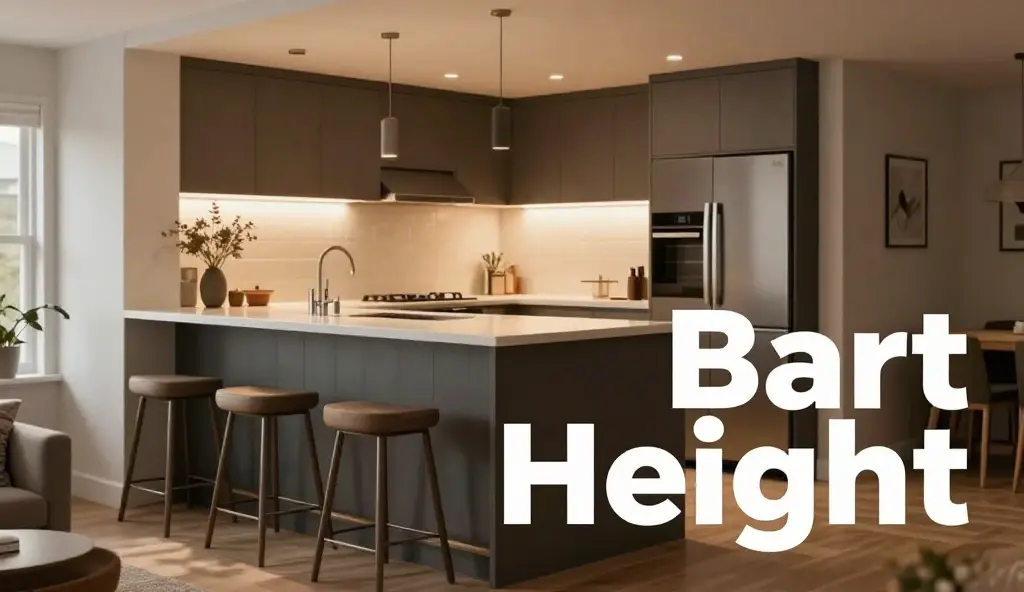
Bar height refers to the standard height used for bars, countertops, and bar tables, typically designed to match bar stools and create comfortable seating in kitchens, restaurants, and entertainment spaces.
In most cases, bar height measures around 40–42 inches (102–107 cm) from the floor to the surface.
People often search for “bar height” when designing kitchens, buying stools, or planning home bars because getting the correct measurement is essential for comfort and usability.
The term is also commonly confused with counter height or table height, making it important to understand the exact dimensions and differences.
In this complete guide, we will break down bar height, its standards in 2026, comparisons, and practical design tips.
What Is Bar Height?
Bar height is a furniture and interior design measurement standard used for elevated surfaces like bar counters and high tables. It is designed specifically to pair with bar stools, creating a comfortable seating position for dining, drinking, or socializing.
Standard Bar Height Measurement
- Inches: 40–42 inches
- Centimeters: 102–107 cm
This height ensures that stools with seat heights of 28–32 inches fit comfortably underneath.
Standard Bar Height in 2026
In 2026, the standard bar height remains consistent across most countries and interior design standards.
Typical Bar Height Range
| Type of Surface | Height (inches) | Height (cm) |
|---|---|---|
| Dining Table | 28–30 in | 71–76 cm |
| Counter Height | 34–36 in | 86–91 cm |
| Bar Height | 40–42 in | 102–107 cm |
This distinction is important when choosing furniture or designing kitchens and restaurants.
Why Bar Height Matters in Interior Design
Choosing the correct bar height is not just about aesthetics—it directly affects comfort, posture, and usability.
Key Reasons Bar Height Is Important:
- Ensures comfortable seating posture
- Matches stool height properly
- Improves usability in kitchens and bars
- Enhances social interaction space
- Prevents back and shoulder strain
A poorly chosen bar height can lead to discomfort and awkward seating positions.
Bar Height vs Counter Height
One of the most common confusions is between bar height and counter height.
Key Differences
| Feature | Counter Height | Bar Height |
|---|---|---|
| Height | 34–36 inches | 40–42 inches |
| Stool Type | Counter stools (24–27 in) | Bar stools (28–32 in) |
| Use Case | Kitchens, islands | Bars, entertainment areas |
Simple Explanation
- Counter height is lower and more common in homes
- Bar height is taller and often used in pubs, restaurants, and home bars
Bar Height in Feet and Inches
For users searching for “bar height in feet,” here is a simple breakdown:
- 3.3 feet to 3.5 feet tall
- Equivalent to 40–42 inches
This makes it significantly taller than a standard dining table.
Bar Height in Centimeters
For international readers:
- Minimum: 102 cm
- Maximum: 107 cm
This measurement is widely used in Europe, including modern home and kitchen design systems.
Bar Height Comparison with Everyday Objects
To better understand bar height, here are some real-world comparisons:
- Slightly taller than a kitchen countertop
- Similar to waist height for an average adult
- Lower than shoulder height
- Comparable to the height of a standard pub counter
Bar Stool Height Guide
Choosing the right stool is just as important as choosing the correct bar height.
Recommended Stool Heights
| Bar Type | Recommended Stool Height |
|---|---|
| Counter Height | 24–27 inches |
| Bar Height | 28–32 inches |
Ideal Legroom
- 9–12 inches between the seat and the counter is ideal
- Ensures comfortable leg movement
- Prevents cramped seating
Bar Height in Homes vs Restaurants
Home Bar Height
In residential spaces, bar height is often used for:
- Kitchen islands
- Breakfast bars
- Home entertainment areas
Restaurant Bar Height
In commercial spaces:
- Standardized for customer comfort
- Designed for durability
- Often includes footrests for support
Why Bar Height Became a Standard
The concept of bar height evolved from traditional pubs and taverns, where elevated counters allowed bartenders to serve customers efficiently.
Historical Reasons:
- Improved visibility for serving drinks
- Better customer interaction
- Space optimization in crowded areas
Factors That Influence Bar Height Design
Several factors affect how bar height is chosen in modern interiors:
1. Ergonomics
Comfort and posture are key considerations.
2. Room Size
Smaller rooms may prefer counter height instead.
3. Purpose
- Dining → counter height
- Socializing → bar height
4. Furniture Style
Modern, industrial, and rustic designs may vary slightly.
Bar Height vs Average Human Height
Understanding bar height compared to human height helps visualize it better.
| Category | Height |
|---|---|
| Average adult male | 5’7″–5’10” (170–178 cm) |
| Average adult female | 5’3″–5’6″ (160–167 cm) |
| Bar height | 3.3–3.5 ft (102–107 cm) |
This shows that bar height reaches about mid-torso level for most adults.
Timeline: Evolution of Bar Height Design
Early 1800s
Bars were simple wooden counters with no standard height.
1900s
Commercial bars began standardizing around 40 inches.
2000s
Home kitchens adopted bar-style counters.
2020–2026
Ergonomic and modular designs dominate interior trends.
Interesting Facts About Bar Height
- Bar height is nearly universal worldwide
- It is influenced by average stool design standards
- Many modern kitchens combine counter and bar height in one space
- It improves social interaction in homes
- It is one of the most searched furniture measurements online
Common Mistakes When Choosing Bar Height
1. Wrong Stool Size
Too tall or too short stools reduce comfort.
2. Ignoring Legroom
Always leave enough space between the seat and the counter.
3. Mixing Counter and Bar Heights
This creates an uneven kitchen design.
Design Tips for Perfect Bar Height Setup
- Maintain consistent height across the counter
- Choose stools with adjustable height if unsure
- Match design style with room theme
- Ensure proper lighting above bar-height counters
- Use footrests for extra comfort
Bar Height Around the World
- USA: 40–42 inches standard
- Europe: 102–107 cm standard
- Asia: Slight variation depending on kitchen design trends
Despite small differences, global standards remain very similar.
FAQs:
Q1. What is the bar height in feet?
A: Bar height is approximately 3.3 to 3.5 feet tall.
Q2. What is the bar height in inches?
A: It ranges from 40 to 42 inches.
Q3. What is the bar height in cm?
A: Bar height measures 102 to 107 cm.
Q4. Is the bar height taller than the counter height?
A: Yes, bar height is about 4–6 inches taller than counter height.
Q5. What stool height is best for bar height?
A: A stool height of 28–32 inches is recommended.
Q6. Why is bar height important?
A: It ensures comfort, proper seating posture, and better usability.
Conclusion:
Bar height is a standard furniture measurement used in homes, restaurants, and bars, typically ranging from 40 to 42 inches (102–107 cm). It plays a crucial role in interior design, especially when selecting stools and planning kitchen or entertainment spaces. Compared to counter height, bar height is significantly taller and designed for social seating environments. Understanding bar height helps avoid design mistakes and ensures comfort and functionality. As modern homes continue to embrace open kitchen and social layouts, bar height remains a key element in 2026 interior design trends, making it one of the most searched and important measurements today.
