
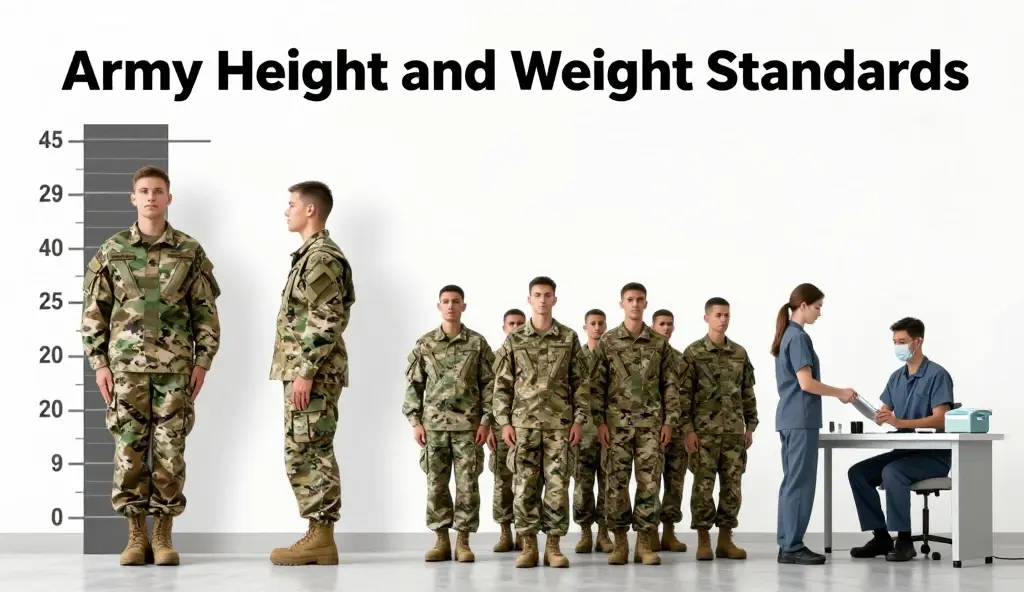
Army height and weight standards are the physical requirements used to determine whether soldiers meet the body composition guidelines required for military service.
These standards help ensure that personnel maintain the fitness and readiness needed to perform demanding duties.
Many people search for army height and weight standards when preparing to enlist, applying for military programs, or checking whether they meet current requirements.
Height and weight requirements vary depending on age, gender, and branch-specific regulations.
Candidates who exceed weight limits may still qualify through body fat measurements and additional assessments.
Understanding these standards is important for anyone considering a military career or maintaining active-duty eligibility.
What Are Army Height and Weight Standards?
Army height and weight standards are guidelines established to ensure soldiers maintain proper physical fitness and body composition.
These standards are designed to:
- Promote health and readiness.
- Reduce injury risks.
- Maintain operational effectiveness.
- Ensure soldiers can perform physically demanding tasks.
The standards apply to:
- Recruits.
- Active-duty soldiers.
- Reserve personnel.
- National Guard members.
Army Height and Weight Standards in 2026
The 2026 standards continue to focus on body composition rather than simply body weight. Soldiers are evaluated based on:
- Height
- Weight
- Age
- Gender
- Body fat percentage
Those exceeding the maximum allowable weight may undergo:
- Circumference measurements
- Body fat assessment
- Additional fitness evaluations
How Army Height and Weight Standards Work
Height Requirements
Typical minimum height requirements range from:
| Gender | Minimum Height |
|---|---|
| Male | 60 inches (5’0″) |
| Female | 58 inches (4’10”) |
Maximum height requirements generally range up to:
| Gender | Maximum Height |
|---|---|
| Male | 80 inches (6’8″) |
| Female | 80 inches (6’8″) |
Army Weight Standards by Height
Below is a general example of weight ranges.
| Height | Weight Range (Male) | Weight Range (Female) |
|---|---|---|
| 5’0″ (152 cm) | 97–128 lbs | 91–119 lbs |
| 5’4″ (163 cm) | 110–145 lbs | 102–134 lbs |
| 5’8″ (173 cm) | 125–174 lbs | 116–152 lbs |
| 6’0″ (183 cm) | 140–200 lbs | 130–171 lbs |
| 6’4″ (193 cm) | 160–225 lbs | 148–195 lbs |
Exact requirements may vary depending on age and military regulations.
Why Does the Army Have Height and Weight Standards?
The military maintains these standards to:
Improve Combat Readiness
Physically fit soldiers are better prepared for demanding missions.
Reduce Health Risks
Healthy body composition lowers the likelihood of:
- Heart disease
- Diabetes
- Joint injuries
- Fatigue
Enhance Performance
Maintaining proper weight helps soldiers:
- Run faster.
- Carry equipment efficiently.
- Complete physical training successfully.
Body Fat Standards and Measurements
If a soldier exceeds the maximum weight for their height, body fat percentage becomes important.
Maximum Body Fat Limits
Men
| Age | Maximum Body Fat |
|---|---|
| 17–20 | 20% |
| 21–27 | 22% |
| 28–39 | 24% |
| 40+ | 26% |
Women
| Age | Maximum Body Fat |
|---|---|
| 17–20 | 30% |
| 21–27 | 32% |
| 28–39 | 34% |
| 40+ | 36% |
Factors That Affect Army Height and Weight Standards
Several factors influence eligibility:
Age
Older soldiers are generally allowed slightly higher body fat percentages.
Gender
Male and female standards differ because of physiological differences.
Muscle Mass
Highly muscular individuals may weigh more while remaining within acceptable body fat limits.
Lifestyle
Healthy habits play a major role:
- Balanced diet
- Regular exercise
- Strength training
- Cardiovascular fitness
- Quality sleep
Army Height and Weight Standards vs Average Americans
Average adult measurements in the United States:
| Category | Men | Women |
|---|---|---|
| Average Height | 5’9″ (175 cm) | 5’4″ (162 cm) |
| Average Weight | 199 lbs | 170 lbs |
Compared with the general population, military standards emphasize:
- Lean body composition.
- Physical readiness.
- Healthy weight management.
Timeline of Army Height and Weight Standards
1940s
Focus primarily on minimum weight requirements.
1960s
More structured fitness guidelines were introduced.
1980s
Body fat measurements became common.
2000s
Improved scientific approaches to body composition.
2026
Greater emphasis on overall fitness and performance rather than weight alone.
How to Meet Army Height and Weight Standards
Follow a Balanced Diet
Eat:
- Lean proteins
- Fruits
- Vegetables
- Whole grains
Limit:
- Processed foods
- Sugary beverages
- Excess saturated fats
Exercise Regularly
Combine:
- Strength training
- Running
- Walking
- Interval training
Stay Hydrated
Water supports:
- Metabolism
- Recovery
- Physical performance
Get Enough Sleep
Seven to nine hours of sleep improves:
- Hormone regulation
- Muscle recovery
- Energy levels
Common Reasons Candidates Fail Army Height and Weight Standards
Some common factors include:
- Poor eating habits.
- Lack of exercise.
- Excess body fat.
- Sedentary lifestyle.
- Inconsistent fitness routines.
Fortunately, many applicants can improve their eligibility through structured training and nutrition programs.
Interesting Facts About Army Height and Weight Standards
- Height requirements have changed several times throughout history.
- Weight alone does not determine eligibility.
- Body fat percentage often provides a better picture of fitness.
- Highly muscular individuals may exceed weight charts but still qualify.
- Modern military standards focus more on readiness than appearance.
FAQs:
Q1. What are the army height and weight standards?
A: Army height and weight standards are physical guidelines that determine whether soldiers meet required body composition and fitness criteria.
Q2. Is there a minimum height requirement?
A: Yes. Generally, minimum heights are:
- Men: 5’0″ (152 cm)
- Women: 4’10” (147 cm)
Q3. Can I join the Army if I exceed the weight limit?
A: Possibly. Candidates may undergo body fat measurements and additional evaluations.
Q4. Are the army’s height and weight standards different for men and women?
A: Yes. Height, weight, and body fat standards differ based on gender and age.
Q5. Have army height and weight standards changed over time?
A: Yes. Modern standards place more emphasis on body composition and overall fitness rather than weight alone.
Q6. Do muscular people have exceptions?
A: Individuals with high muscle mass may exceed weight limits while remaining within acceptable body fat percentages.
Conclusion:
Understanding army height and weight standards is essential for anyone planning to enlist or maintain military readiness in 2026. These requirements are designed to ensure soldiers remain physically capable, healthy, and prepared for demanding missions. While height and weight charts provide a general framework, body fat percentage and overall fitness are equally important. Candidates who exceed weight limits may still qualify through additional assessments. By maintaining healthy eating habits, regular exercise, and proper recovery, individuals can improve their chances of meeting military requirements and achieving long-term success in service.

Mason Turner is a branding specialist and content writer passionate about creating short, impactful slogans that leave a lasting impression.